One trip. One workflow.
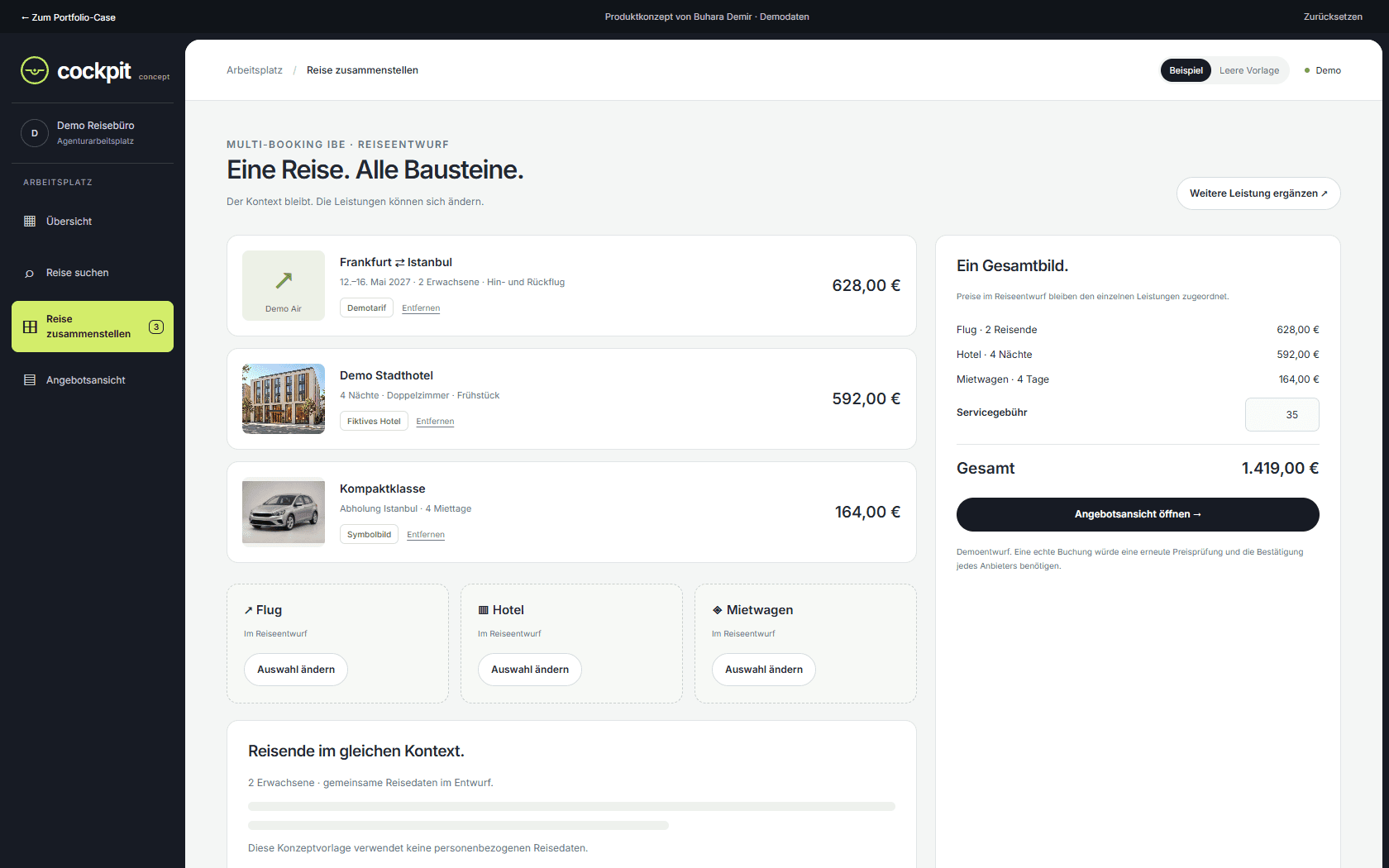
Flight times, hotel nights and a rental car belong to the same trip. That relationship should be clear in the interface too. Cockpit is my concept for a multi-booking IBE, an Internet Booking Engine that brings flights, hotels and rental cars into one agency workspace.
The trip as the shared context
The starting point is the travel agent's work: understand a trip, find suitable services, explain the conditions and put together an offer. Destination, dates and travellers remain the common reference throughout.
I developed Cockpit as a local agency workspace. The product model includes search, booking flows with demo data, offers and management areas. The multi-booking idea extends that starting point: several services could belong to one trip draft while keeping their prices, conditions and confirmations clear.
This case presents a separate, simplified portfolio demo of that idea.
What I designed
The flow. Workspace, search, trip draft and offer preview form four connected steps. Adding another service builds on the existing draft. The selection stays in place when switching between views.
The decisions. Flight fares, hotel rates and rental-car categories have different characteristics. They need consistent readability and enough room for their own conditions. Each service contributes an identifiable amount to the total. The agency service fee appears separately.
The interface. Graphite gives the workspace a calm foundation. Lime points to the next action. The hierarchy follows the task: search, compare, select, review and explain. On narrow screens, navigation, selection and the price summary stack in the same order.
Making the idea tangible
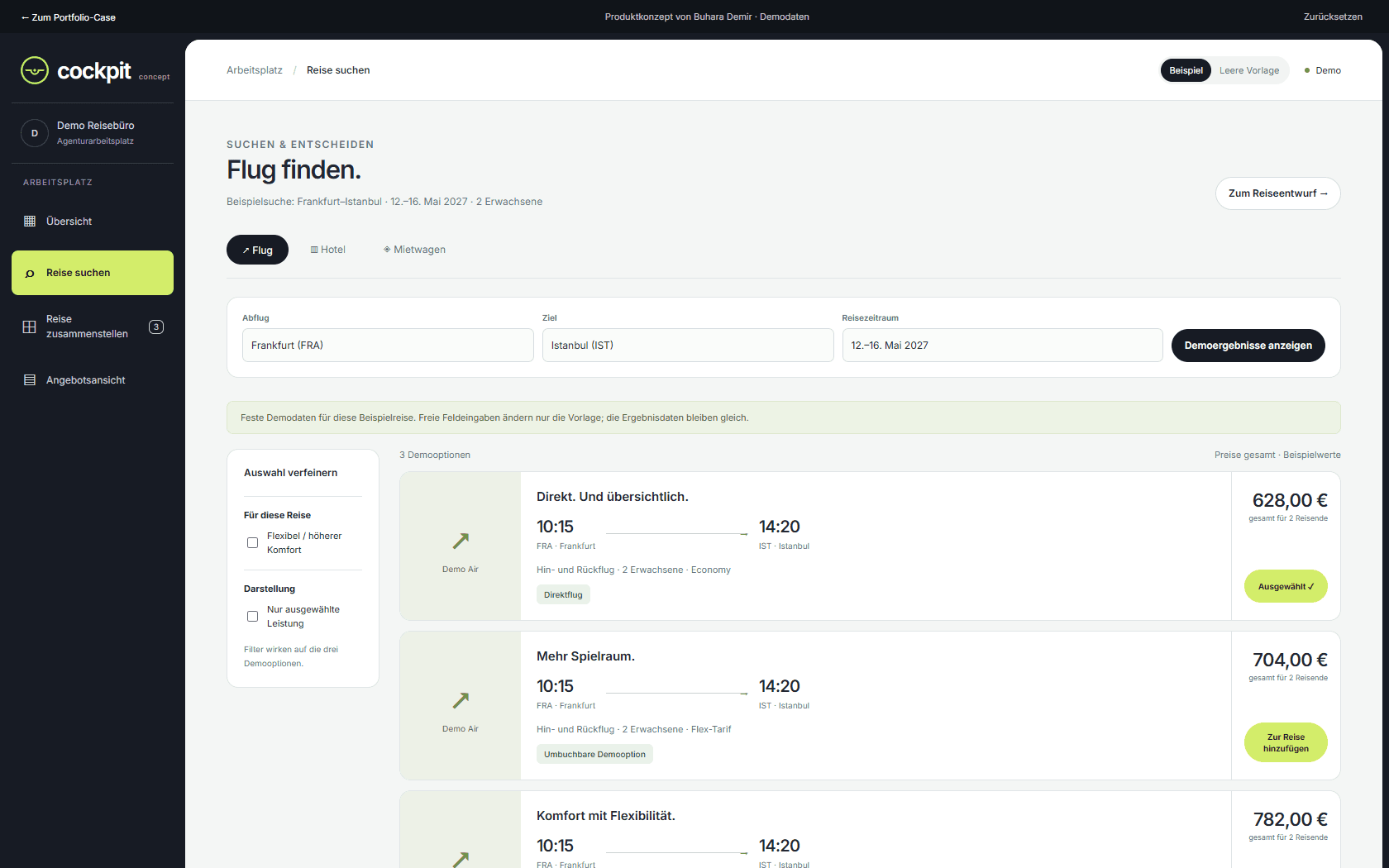
The example trip runs from Frankfurt to Istanbul for two adults, from 12 to 16 May 2027. Results, prices and suppliers are deliberately fictional.
The demo lets you select or remove a flight, hotel and rental car. Choosing different options or changing the service fee updates the total. The offer preview uses the current selection. This makes the relationship between individual decisions and the complete trip visible.
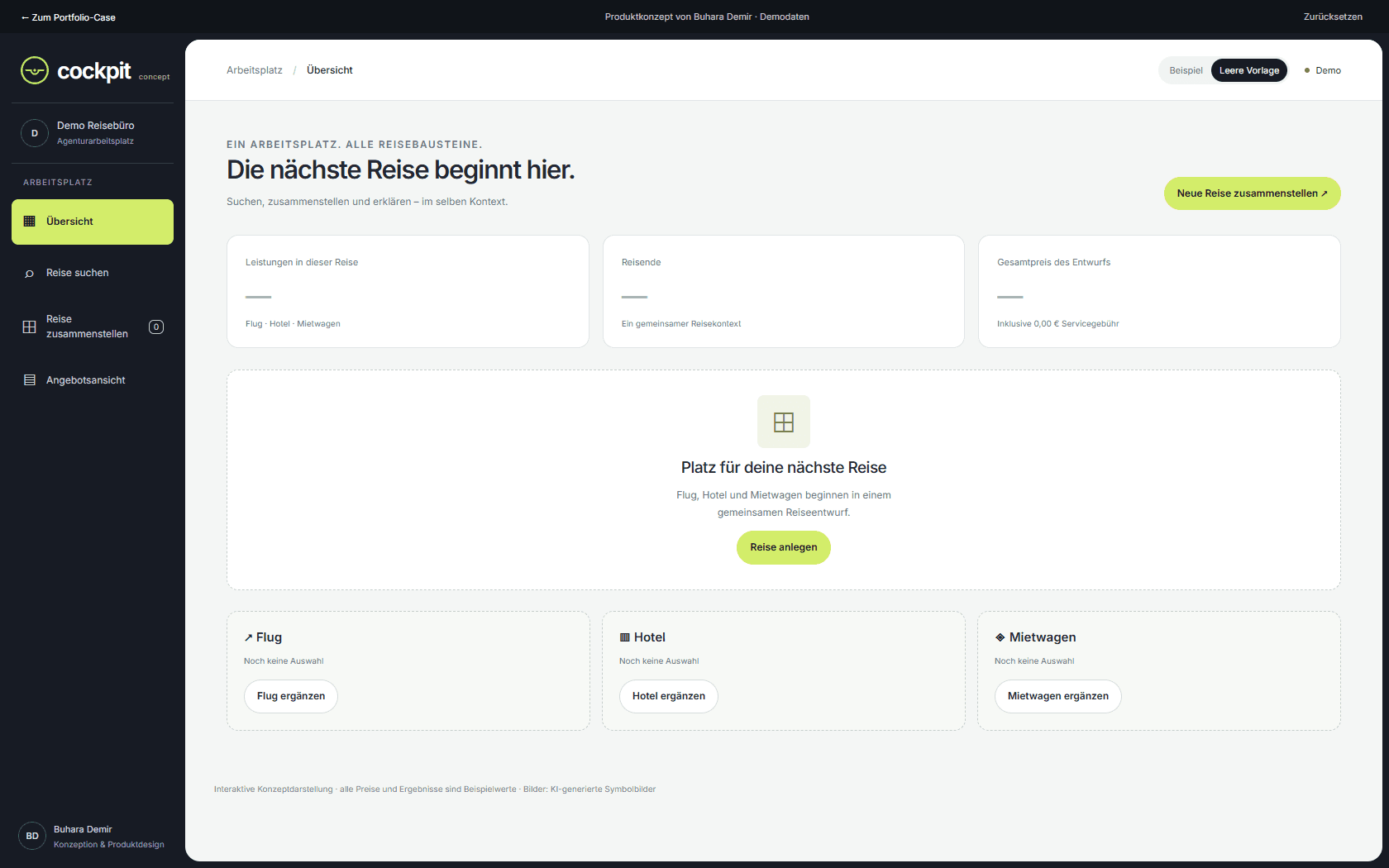
Four empty templates show the same structure without a prefilled trip. They can support another travel example or a new product idea. A switch connects the empty state with the demo example.
Open the clickable Cockpit prototype (German) Start with an empty trip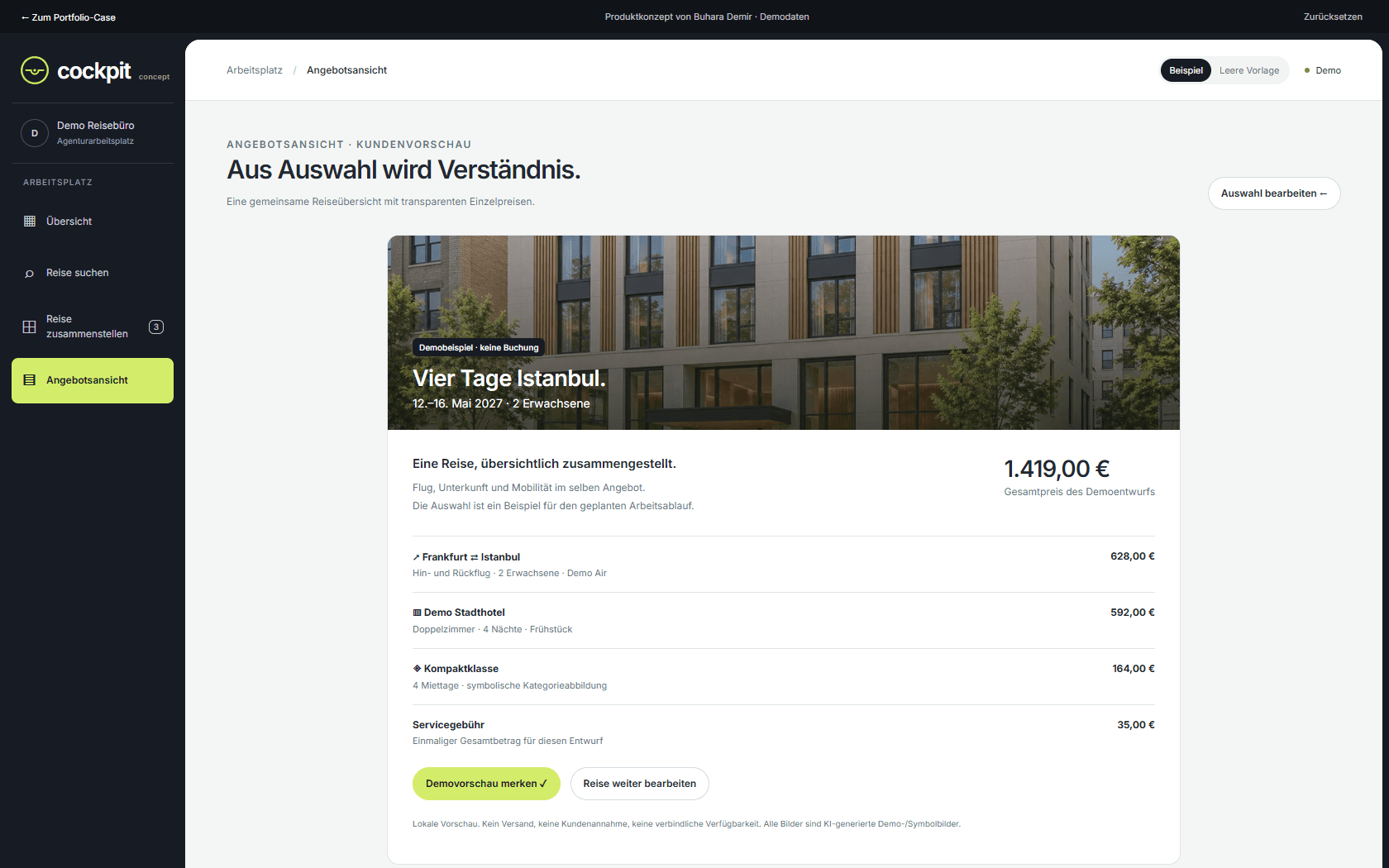
Four empty starting points
Each template opens a view without preselected services. Choose “Beispiel” to explore the workflow with fictional data. The interactive prototype is in German.
 WorkspaceOpen empty template · German
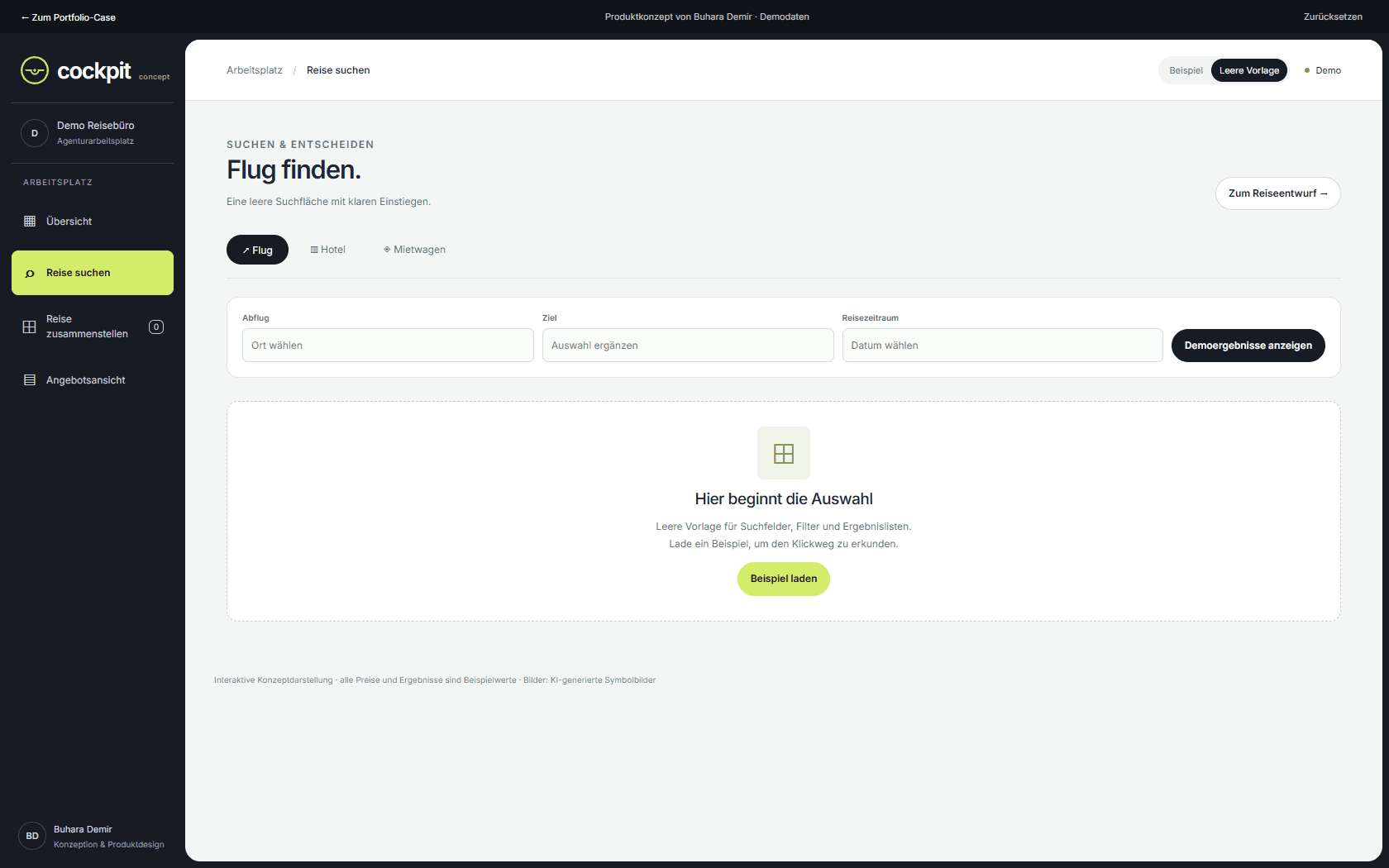 SearchOpen empty template · German
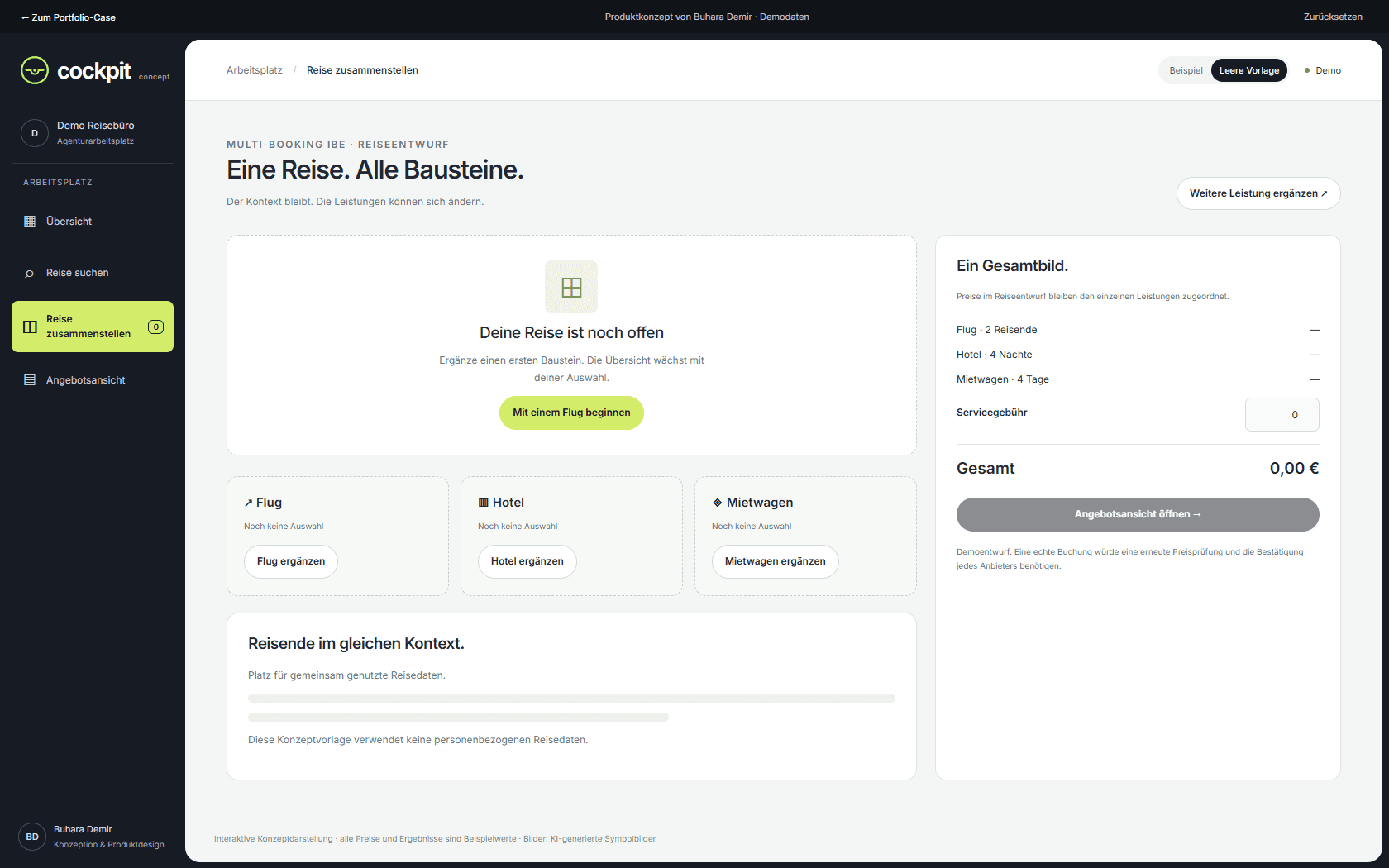 Trip draftOpen empty template · German
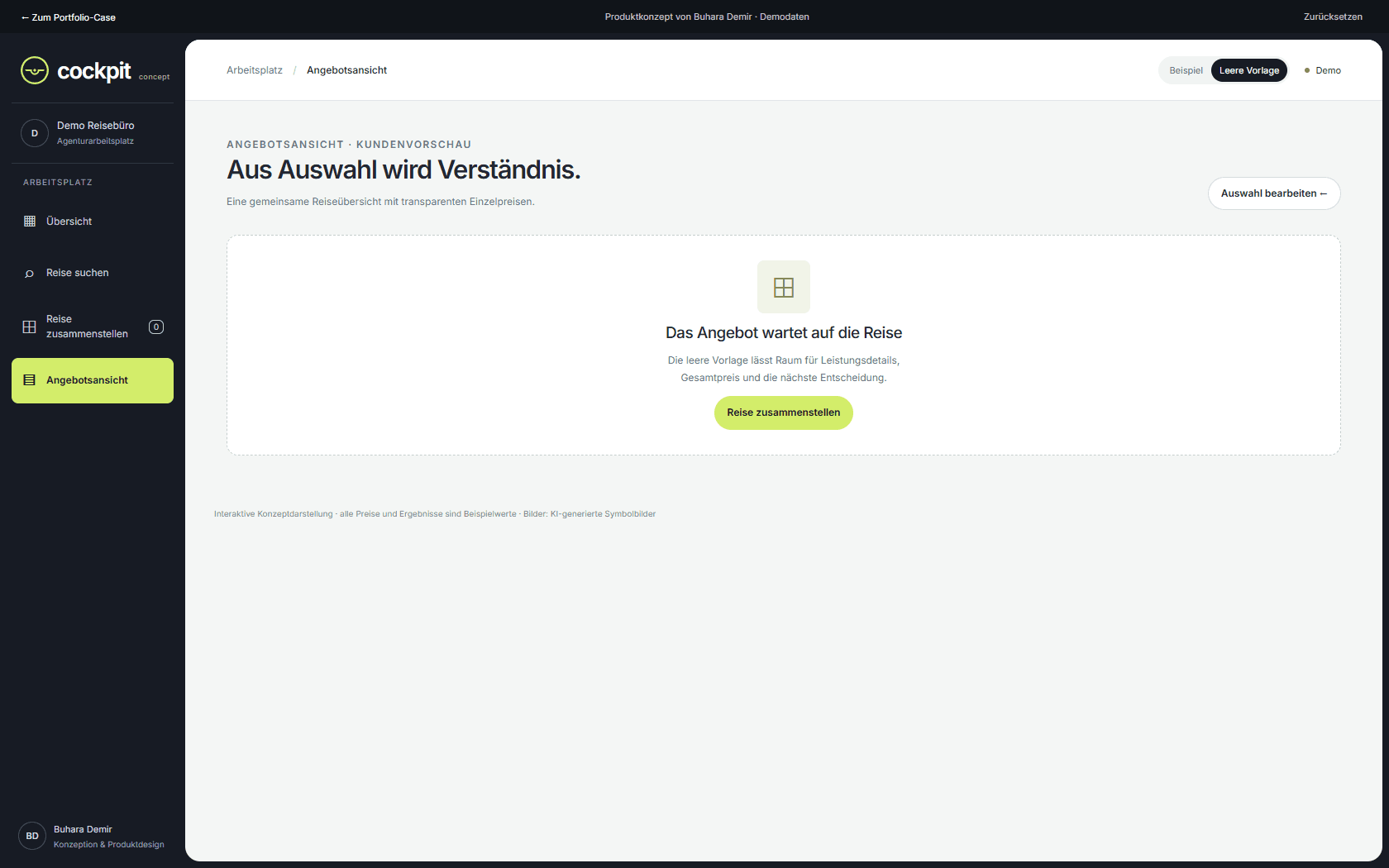 Offer previewOpen empty template · German
Identity and motion
Graphite gives the workspace a calm foundation. Lime points to the next action. The logo film shows the evolution of the Cockpit mark.
What a shared booking flow would need to resolve
A shared trip draft coordinates several services. A real implementation would need each supplier to confirm availability and price again. If one supplier rejects a request, the agent would need to know which other services are still open, reserved or confirmed.
That is the next product question: how does a trip remain understandable when its components follow different conditions, payments and confirmations?
Project status
Cockpit exists as a local product model with demo flows. The multi-booking demo shown here is a concept and simulation. It triggers no real bookings and claims no measured business outcomes or production integrations.
The mockups are captures of the clickable prototype. Travel photos are AI-generated demo and category images. The logo film adds the visual identity.
For me, the case connects product thinking, flow architecture and design: a complex trip becomes a workflow that an agency can understand and explain to its customers.
Discuss the Cockpit concept