Payments in travel are reconciled by hand more often than anyone admits.
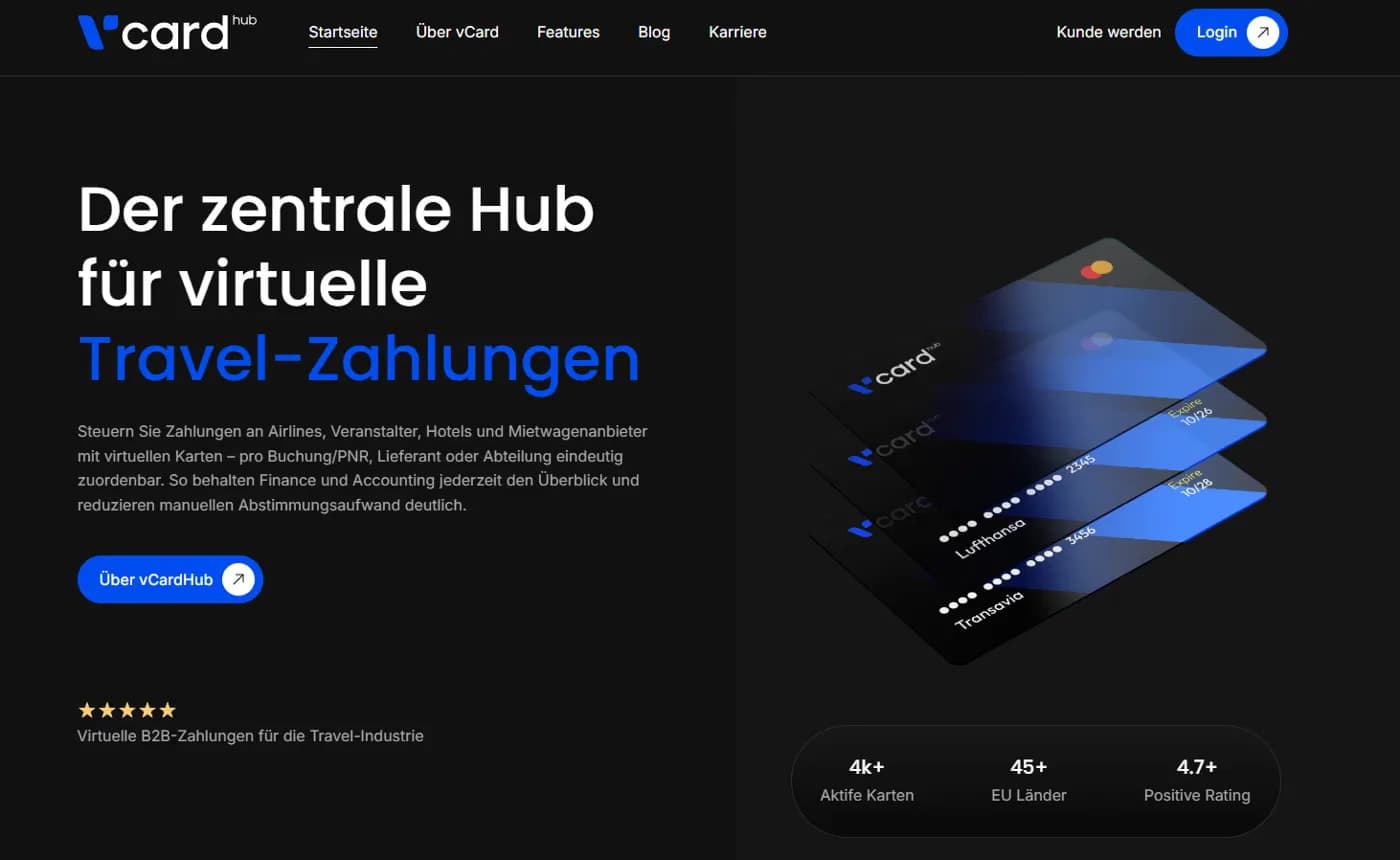
What the product does
A virtual card per booking, per supplier, per cost centre. Instead of one company card paying forty suppliers a month and finance reconstructing afterwards which charge belongs to which trip, every payment carries its reference from the start.
Airlines, tour operators, hotels, car rental. Settled through regulated issuers in Germany, connected to booking tools and ERP systems by API or file transfer.
The positioning problem
Payment products are sold on trust, and trust in this category is claimed identically by everyone: secure, compliant, seamless. Three words that appear on every competitor's page and distinguish nothing.
What actually differentiates a product like this is the boring part: that a charge on a statement can be traced back to a passenger name record without anyone opening a spreadsheet. So that is what the communication leads with, and the compliance language sits underneath where a finance director will look for it rather than at the top where it becomes wallpaper.
What I worked on
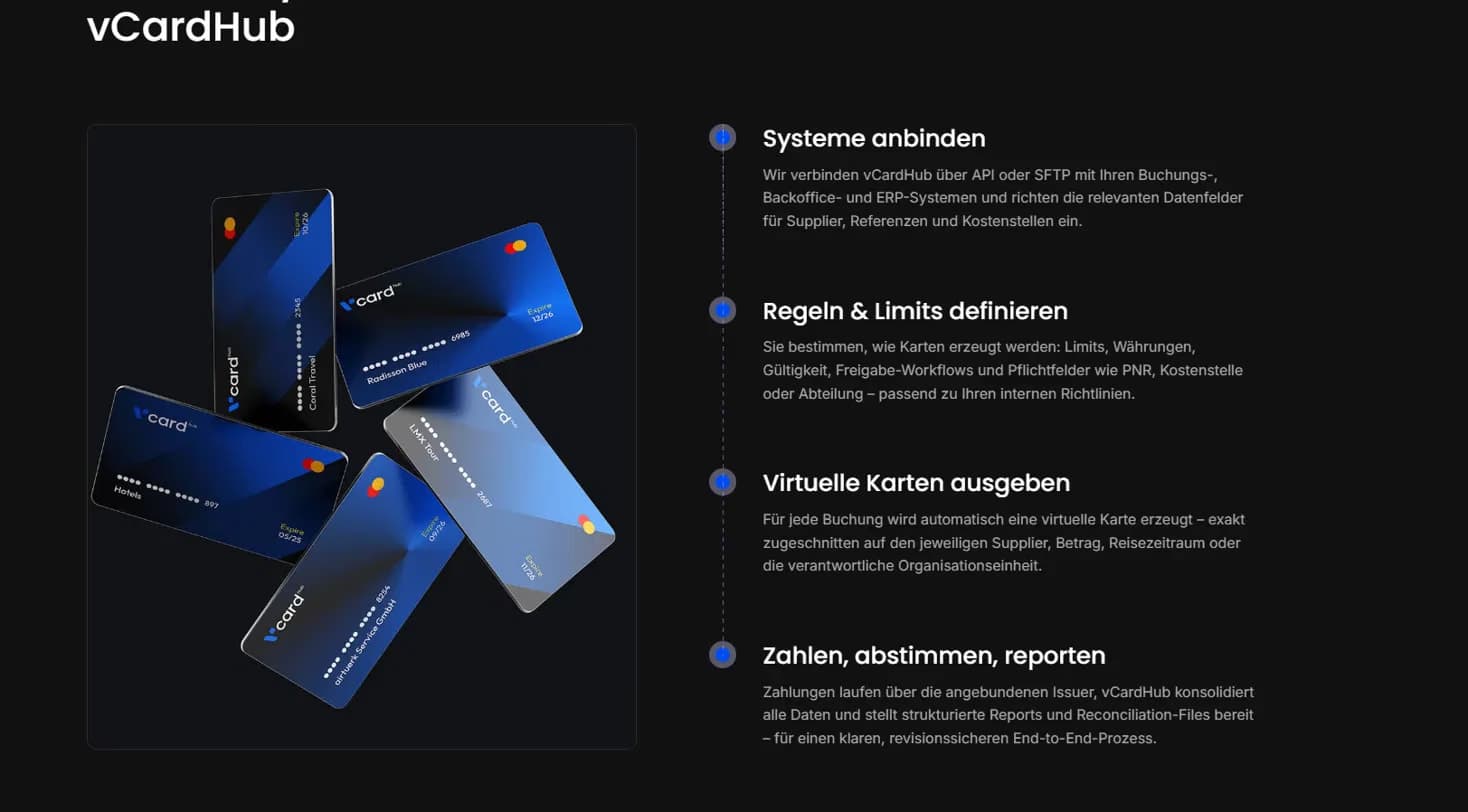
Brand and visual system. The site and its structure. And the part that is invisible from the outside: which data fields have to travel with a card for the reconciliation promise to hold, and how they get there from a booking system that was never designed to pass them along.
That last piece is where most payment integrations quietly fail. The card issues fine. The reference field arrives empty, and three months later finance is back to matching by amount and date.